Alex Long · 8 October 2026
Tracing the Evolution of Quality Control Protocols in Small-Scale Botanical Extraction Facilities
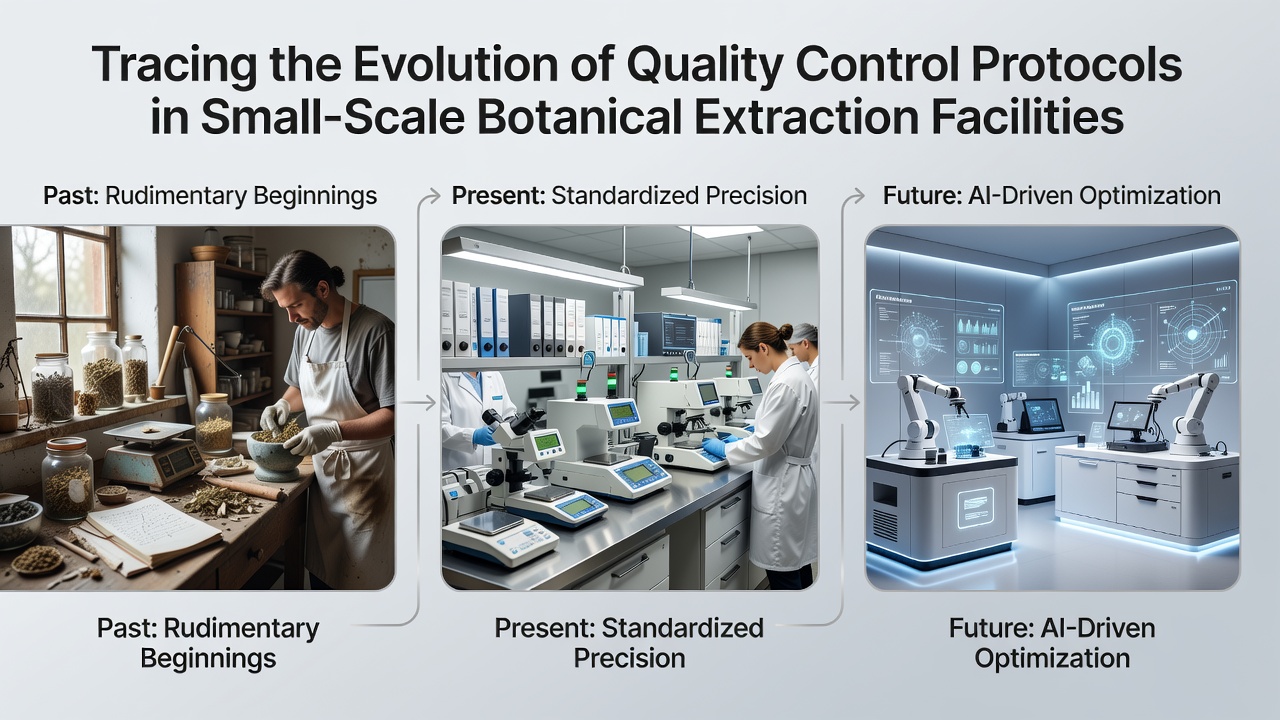
Small-scale botanical extraction facilities have refined their quality control approaches over decades as demand for plant-derived extracts grew in wellness and pharmaceutical sectors, and observers note that early protocols relied primarily on visual inspections along with basic sensory evaluations before more structured systems emerged in the mid-20th century.
Initial methods centered on manual checks for color, odor, and texture while simple solvent tests helped verify basic purity, yet facilities often operated without standardized documentation until regulatory pressures began to shape practices in teh 1970s and 1980s, and data from industry reports shows that these rudimentary steps laid the groundwork for later advancements.
Regulatory Milestones Shaping Early Standards
Legislative changes in multiple regions prompted facilities to adopt formal record-keeping and testing routines, for instance the United States introduced cGMP requirements for dietary supplements that took effect around 2007 and required small operators to implement identity, purity, and strength verification, while similar frameworks developed in Canada through Health Canada guidelines and in Australia via Therapeutic Goods Administration oversight.
Researchers have documented how these rules encouraged small-scale sites to move beyond informal checks toward batch sampling and third-party laboratory partnerships, and one study revealed that compliance rates improved steadily as operators integrated written procedures for raw material sourcing and finished product release.
Technological Shifts in Analytical Capabilities
Advancements in instrumentation transformed testing accuracy during the 1990s and early 2000s when high-performance liquid chromatography and gas chromatography-mass spectrometry became more accessible to smaller operations through shared lab networks or affordable benchtop models, and experts observed that these tools allowed precise quantification of active compounds along with detection of contaminants such as heavy metals and microbial loads.
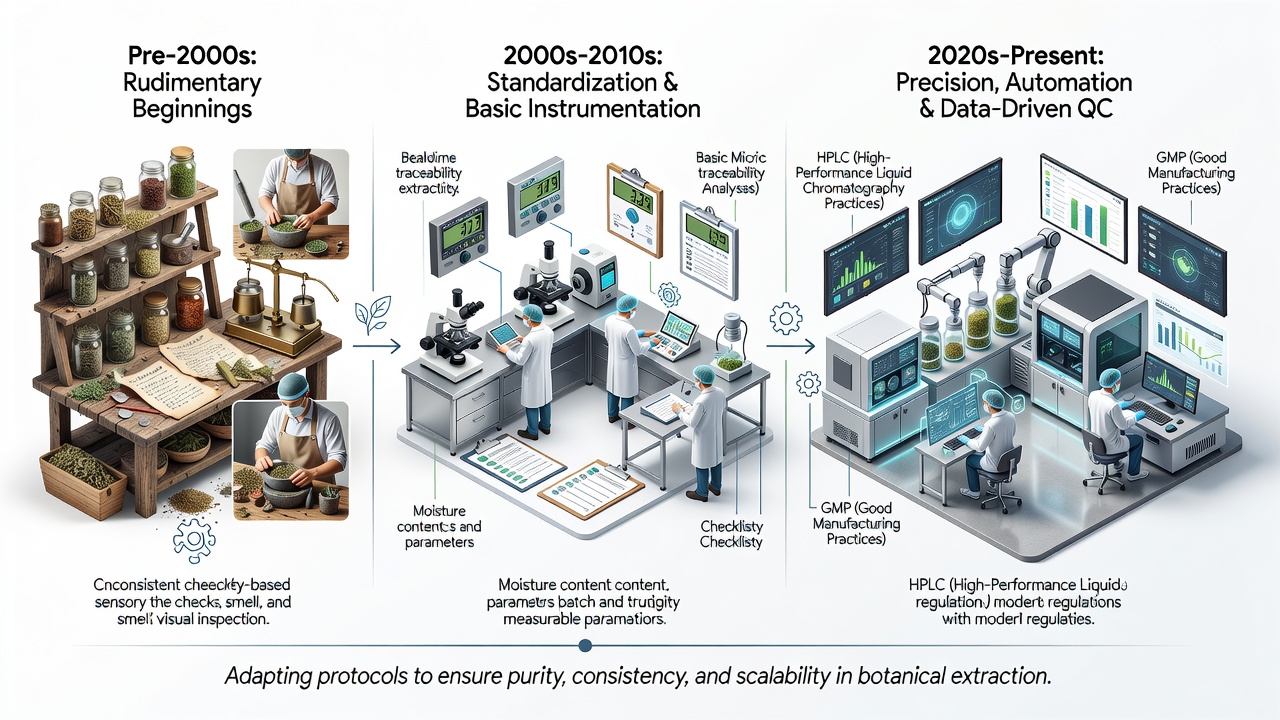
Facilities began incorporating near-infrared spectroscopy for rapid in-process monitoring, which reduced reliance on time-consuming wet chemistry methods, while data indicates that adoption accelerated after 2010 as equipment costs declined and training programs expanded, and this shift enabled consistent monitoring throughout extraction cycles rather than end-product only verification.
Adaptations for Small-Scale Operations in Recent Years
Small facilities faced unique constraints compared with large manufacturers, so many developed hybrid protocols that combined manual oversight with targeted automated checks to maintain cost-effectiveness, and according to the FDA guidance on dietary supplement manufacturing operators learned to prioritize critical control points like solvent residue limits and extract concentration levels.
By the mid-2020s integration of digital record systems and blockchain-based traceability tools started appearing in boutique operations, and reports from European regulatory bodies highlight how these additions helped meet updated EU herbal medicinal product directives that emphasized supply chain transparency, while Australian and Canadian frameworks continued to emphasize risk-based sampling tailored to facility size.
One notable development around 2025 involved increased use of portable testing devices that allowed on-site verification of cannabinoid profiles or terpene content in facilities processing cannabis-derived botanicals, and figures reveal that such tools cut turnaround times from days to hours without sacrificing precision.
Current Practices Observed in October 2026
As of October 2026 small-scale botanical extraction sites routinely employ multi-tiered quality systems that begin with supplier qualification audits and extend through real-time process analytics and final release testing, and researchers note that environmental monitoring for temperature, humidity, and airborne particulates has become standard to prevent degradation during storage and processing.
Collaboration with academic institutions has grown, enabling access to advanced metabolomics profiling that identifies subtle batch variations, whereas earlier decades depended on fewer markers, and evidence suggests these expanded datasets support more reliable product consistency across seasonal harvests.
Conclusion
The progression of quality control in these facilities reflects broader regulatory, technological, and operational changes that continue to influence practices worldwide, and ongoing refinements ensure that small-scale producers maintain compliance while meeting evolving market expectations for safety and traceability.